Guide
Create a Vacation Rental Website: The Complete Guide
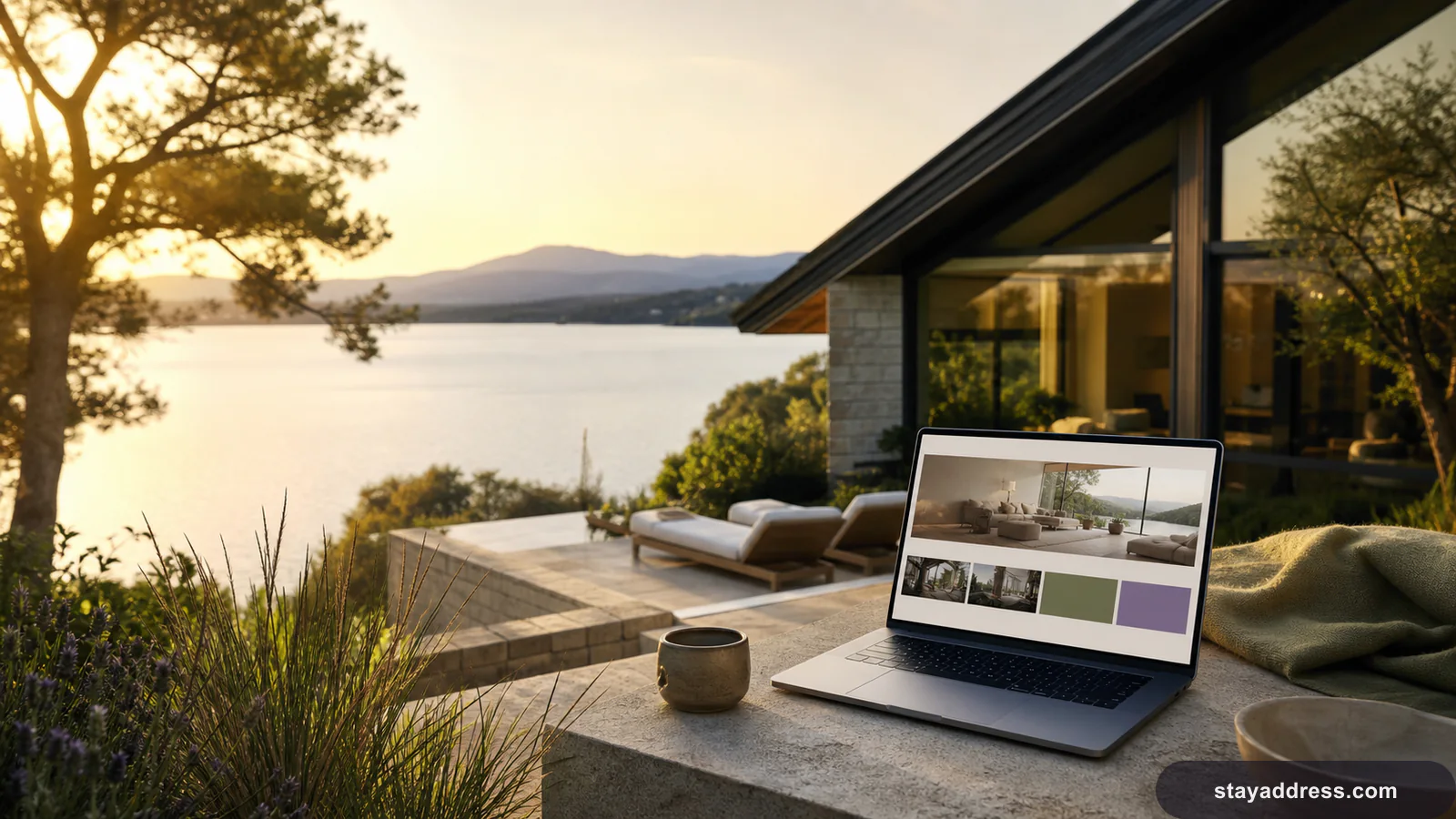
Your own website for your vacation rental is more than a digital business card. It is your shop window, your booking system, and your direct line to the guest.
Why your own website for your vacation rental makes sense
Many hosts start with listings on large booking platforms. That is practical, but it also brings dependencies: commissions, externally determined rules, and little room for your own story. Your own website shifts the balance. You decide how your rental is presented, which rules apply, and how the booking process works.
At the same time, the website is your only place where you truly own the guest relationship. You can send newsletters, maintain regular guests, and collect data for your own evaluations. This is the foundation for direct booking, meaning reservations that occur without a platform in between.
If you want to work independently in the long term, you can hardly avoid your own website. It is not a replacement for platforms, but a second pillar that can even become the most important one over time.
- Independent presentation without third-party specifications
- Direct contact with the guest without detours
- Fewer commissions on direct bookings
- Better data sovereignty for your own evaluations
The building blocks of a good vacation rental website
Before you decide on a tool or a website builder, it is worth looking at the elements that every vacation rental website needs. These include appealing photos, an honest description, an availability calendar, a booking function, a contact form, and legal pages like an imprint and privacy policy.
Added to this are content that creates trust: reviews from previous guests, information about the surroundings, tips for arrival and stay. A map with restaurants, hiking trails, or excursion destinations nearby makes the page lively and useful.
Technically, you need a domain, i.e., an internet address like www.your-vacation-rental.com, as well as hosting, i.e., storage space where your page is located. Many vacation rental providers bundle these building blocks in one package, so you don't have to worry about every detail.
- Domain and hosting as the technical basis
- High-quality photos and honest description
- Calendar, booking function, and contact form
- Imprint, privacy policy, and terms and conditions as mandatory parts
Comparison of the most important building blocks
| Building block | Purpose | Typical effort |
|---|---|---|
| Domain and hosting | Own internet address and storage space | One-time, low annual fee |
| Website builder | Templates and editor without programming | One-time setup, ongoing maintenance |
| Booking system | Process availabilities and payments | Monthly fee depending on provider |
| Photos and texts | Convince guests and build trust | One-time, later updates |
| Multilingualism | Appeal to international guests | One-time translations, ongoing maintenance |
Content that convinces guests
Search engines like Google evaluate content based on how helpful it is to readers. This means: a page that answers real questions performs better than one that just repeats keywords. Transferred to your vacation rental, this means: don't just describe the amenities, but also the feeling, the everyday life, and the special features of your region.
Helpful content is created when you imagine what a guest wants to know before booking. What does the surrounding area look like? Where can you shop? Is there a quiet workspace for remote work? What rules apply in the house? Such questions deserve their own sections on the page.
Helpful also means that the content is written for people, not for machines. Understandable language, clear paragraphs, and real photos create more trust than overloaded texts with many technical terms.
- Describe location, surroundings, and everyday life concretely
- Answer typical questions before booking
- Use real photos instead of elaborate staging
- Write in a language that guests understand
Multilingualism and international guests
Many vacation rentals are booked by guests from abroad. A page only in German practically excludes these guests. Multilingualism is therefore not a luxury, but often a necessity. It is usually enough to offer the page in two or three languages, such as German, English, and depending on the region, French or Dutch.
It is important that each language version has its own content and is not just machine-translated. Guests notice when a text is lovingly written in their language. In addition, Google recommends using a separate page structure for each language so that search engines deliver the correct version for the respective country.
Website builders with a built-in multilingual function help with implementation. You maintain the content once per language, and the system takes care of the technical delivery.
- Two to three languages are often enough
- Own texts instead of automatic translations
- Clear structure per language version
- Regional languages matching the target audience
Being found better in search engines
Being found better in search engines means that your page appears as high as possible for relevant search queries. This is achieved through a combination of technical basics, good content, and external signals like links.
Technical basics are fast loading times, a display optimized for mobile devices, and a clear page structure. Content should answer guests' questions and be updated regularly. External signals are created when other pages, such as tourism boards or blogs, link to your page.
For vacation rentals, local search is particularly worthwhile. If someone searches for vacation rental plus place name, you want to be found. For this, entries in Google Maps, mentions in regional directories, and a page where location and surroundings are described in detail help.
- Fast loading time and mobile optimization
- Content that answers real questions
- Regional directories and tourism pages
- Maintaining the Google Maps entry
Booking system and direct booking
A booking system on your own website can save you work. Guests check available travel dates, send a request, or – depending on the chosen process – complete a booking. How quickly the data is up to date depends on the calendar and booking integration.
Many vacation rental providers offer such systems as part of their website builder. They can be connected with calendars from other platforms, so double bookings are avoided. It is important that the system is secure, supports several payment methods, and displays a clear cancellation policy.
Direct booking saves commissions that would be incurred on platforms. Even if only a portion of guests book directly, it makes a difference in the long run. You also get to know your guests better because the first contact takes place directly between you.
- Traceable availability instead of unclear date coordination
- Linking with calendars from other platforms
- Secure payment and clear cancellation rules
- Fewer commissions on direct bookings
Frequently asked questions
How much does an own vacation rental website cost?+
The costs depend on the scope. A simple page with a website builder, domain, and booking system is often possible in the low three-digit range per year. Larger projects with individual design and multiple languages cost more.
Do I need programming skills?+
No. With a website builder, pages can be designed using drag-and-drop. Programming skills are only necessary if you want to implement very individual functions.
How long does it take for the page to go online?+
A simple version with the most important content can often be published within a few days. Fine-tuning, photos, and translations take additional time.
Is an own website worthwhile alongside platforms?+
Yes, because it makes you more independent, saves commissions, and builds direct contact with guests. Platforms and your own website complement each other well.